
Man’s living relatives are being hunted into extinction; just 880 mountain gorillas survive in the world today. The majority live in the areas surrounding the Virunga Mountain Range; a landscape that has suffered at the hands of both man and nature – deforestation, poaching, and volcanic erosion have left the area a shadow of its former self, stripping the primates of their habitat and lifeline.
What if you could play a part in securing their safety? Ingrid Baas of the Bisate Lodge is one such person at the forefront of Rwanda’s conservation efforts. She shares her story…
Read “Kenya: Where the wild things really are”
Ever since I was a little girl, I loved being outdoors and absolutely adored animals. Although I lived with my parents and sister in a small town, I spent most of my holidays on a farm at my aunt and uncle’s house. At home, I would foster cats and dogs whenever people were away on holiday, and I would always come back home with animals I’d found – a wounded duck, exhausted carrier pigeons, or little crow chicks. I would take care of them until they were fit enough to be released. I went on to complete a para-veterinary course and worked in an animal hospital and part time in a monkey and primate rehabilitation centre.
Over the past ten years, my husband Rob and I have settled very easily into different countries around Africa, and we have travelled to even more. Rwanda has not been a difficult place to call home; the people are so friendly and welcome, and the scenery so colourful and lush.
When people think of Rwanda, they often think about the genocide of 1994. Some people think the country is still unsafe, but this is far from the truth – Rwanda is beautiful and very safe to travel. All the people in Rwanda are at peace and live together in harmony. Memorial services are frequently held, where people talk about what has happened and to ensure that it will never happen again. One of these ceremonies is called Umuganda; the word translates to ‘coming together in common purpose to achieve an outcome’. In traditional Rwandan culture, members of the community call upon their family, friends, and neighbours to help complete a difficult task. This often includes infrastructure development and environmental protection.
Feeling inspired? Plan your adventure.
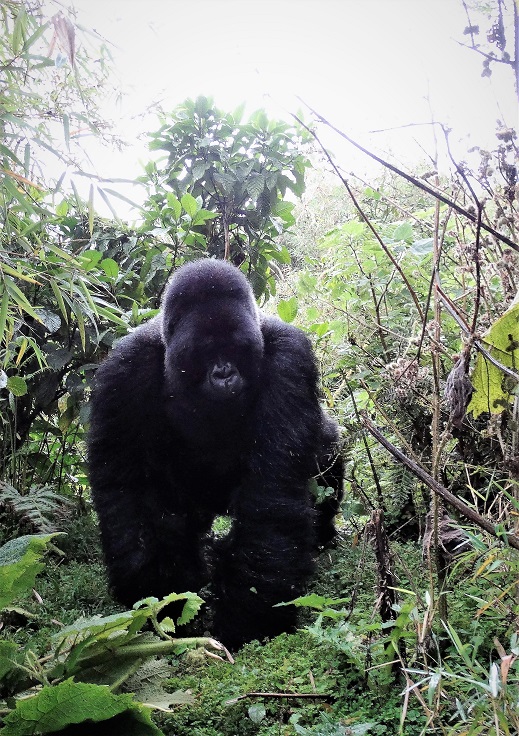
In April we had our very first meeting with one of the most beautiful creatures on our planet, the Mountain Gorilla. We made our way to Volcanoes National Park headquarters, where we were allocated to the group that was going to visit the Hirwa group, consisting of 18 gorillas, including one silverback and, even more special, a set of twins born in 2011. ‘Hirwa’ means ‘The Lucky One’, and lucky we turned out to be. After only 25 minutes of trekking through the bamboo forest, we found what we were looking for. In between the shoots, a young female sat peacefully eating her bamboo. Whilst we quietly started to take our first pictures we could identify a few more gorillas behind her. The following hour went by so quickly, but at the same time, it felt like a lifetime.
The gorilla group was very active. We witnessed them playing, eating, quarrelling over fresh shoots of bamboo, resting, and in some cases, showing off. The twins climbed into the bamboo and started with some gymnastics. One of them had a whole display of tricks. Although we tried our best to keep the seven-metre distance, the gorillas didn’t always oblige. Whilst we were taking pictures the silverback came to have a very close look. All we could do was be submissive and sit still. A visit to the gorillas is a humbling experience, and the memories will last you a lifetime.
I want people to enjoy more than just a bucket list experience with these incredible creatures. We want to imbue them with a desire to conserve the great apes and their habitat. Bisate Lodge will be a world-class example of sustainable conservation tourism making a dramatic, positive and far-reaching impact on the unique fauna and flora of a precious, increasingly rare environment. Over 15,000 trees have been planted to date, already attracting a number of endemic Rwandan species.
Feeling inspired? Ready to embark on a similar trip?